
Vertical oyster gardening
With the support of volunteers, the Coalition to Restore Coastal Louisiana and the Barataria-Terrebonne National Estuary Program will deploy 250 vertical oyster gardens (VOGs) within the Barataria-Terrebonne Estuarine System (BTES) to recruit new oyster growth. The degradation and loss of Louisiana’s coastal ecosystems is particularly acute in the Barataria-Terrebonne system, with impacts concentrated in coastal communities.
The system is experiencing the fastest rate of wetlands loss in the state.
COMING SOON: VOLUNTEER GUIDE
What is a vertical oyster garden?
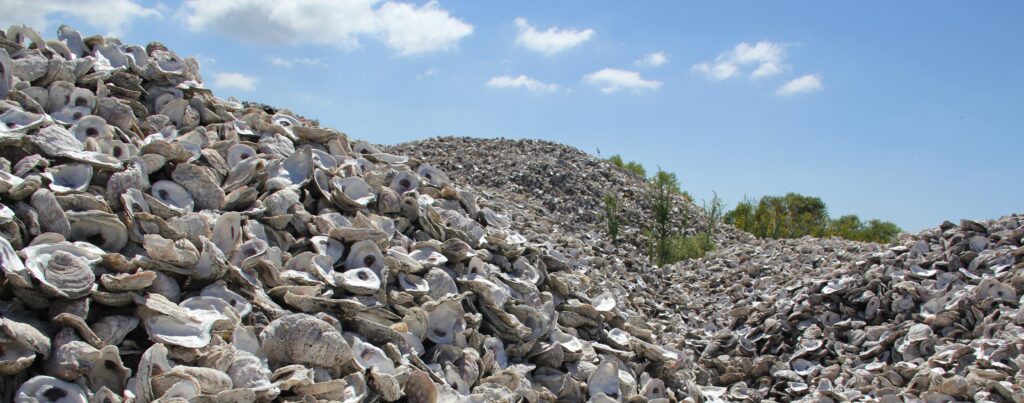
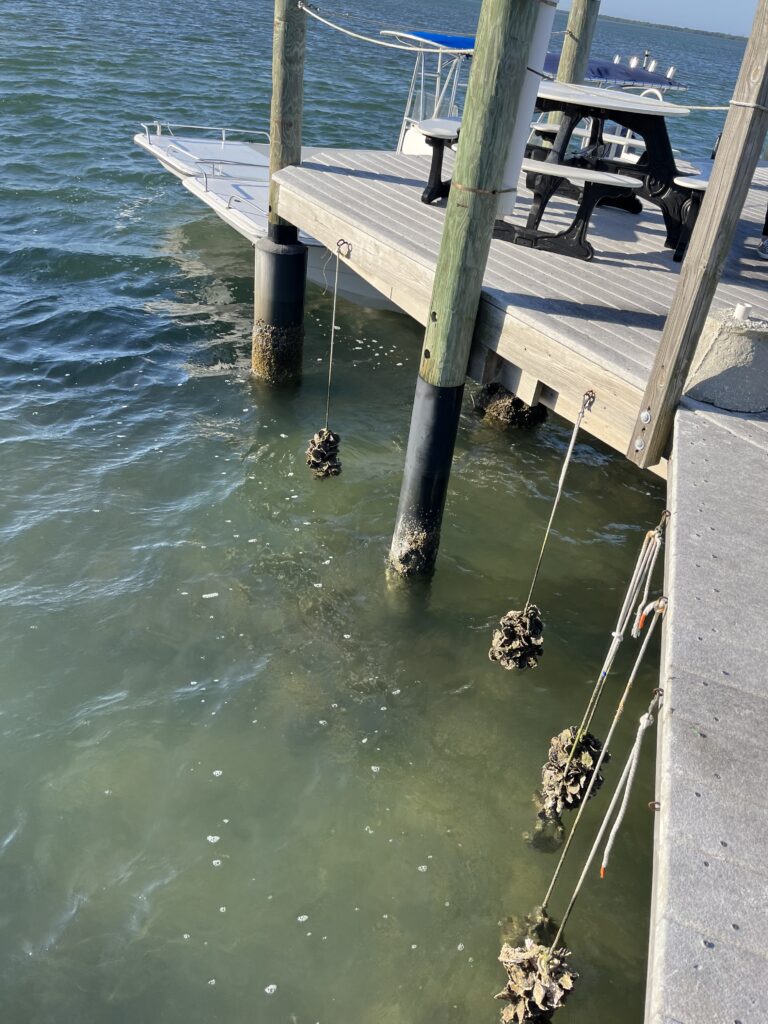
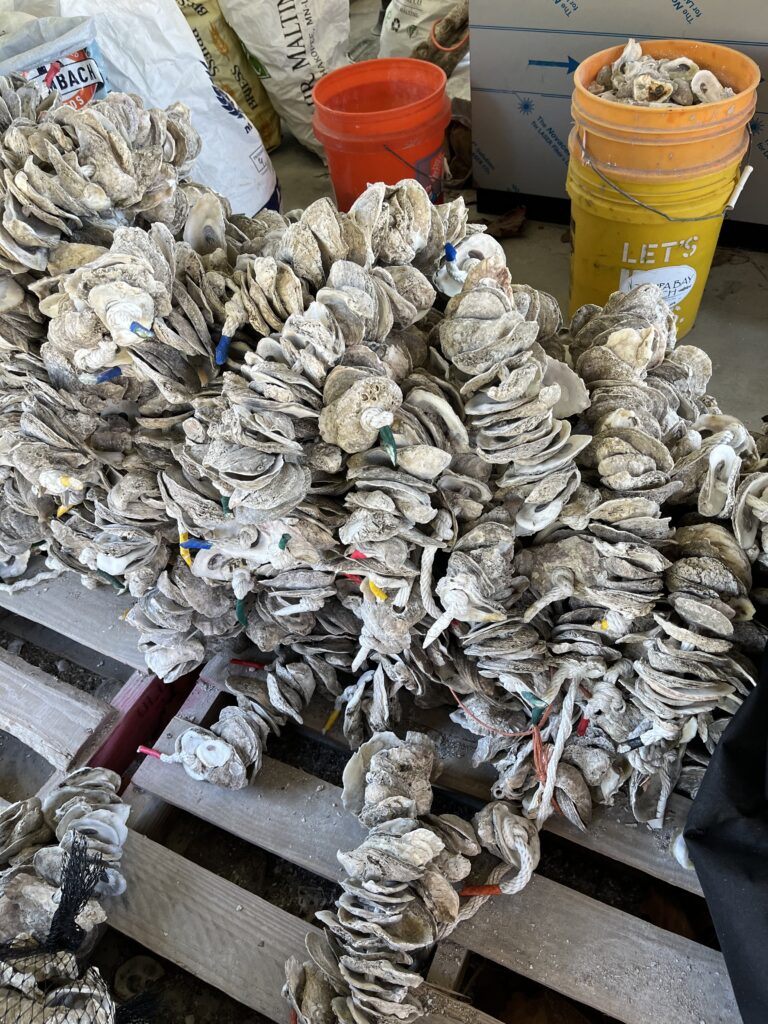
Vertical Oyster Gardens (VOGs) are made of recycled oyster shells from local restaurants. The shells are strung together on a wire and suspended from docks to create oyster habitat and engage the public in community science. CRCL invites members of the public in the Barataria-Terrebonne Estuarine System area to participate in this pilot program.
Why vertical oyster gardens?
- The goal of this project is to assess and track oyster recruitment patterns at waterfront properties through the deployment of vertical oyster gardens. Data will be collected by volunteers and CRCL staff with the aim of understanding how local environmental factors (e.g., water temperature, salinity and water level) influence changes in specimen recruitment atop oyster shell substrate. The project will provide insight into oyster recruitment dynamics and the effectiveness of vertical oyster gardens in promoting oyster populations and improving local water quality and biodiversity.
Assembly and distribution
- CRCL will engage the public to assemble and distribute 250 vertical oyster gardens in the BTES area. These activities are great opportunities for adults and even children to string recycled shells together on wire and tie the finished product to a dock.

Community-Driven science
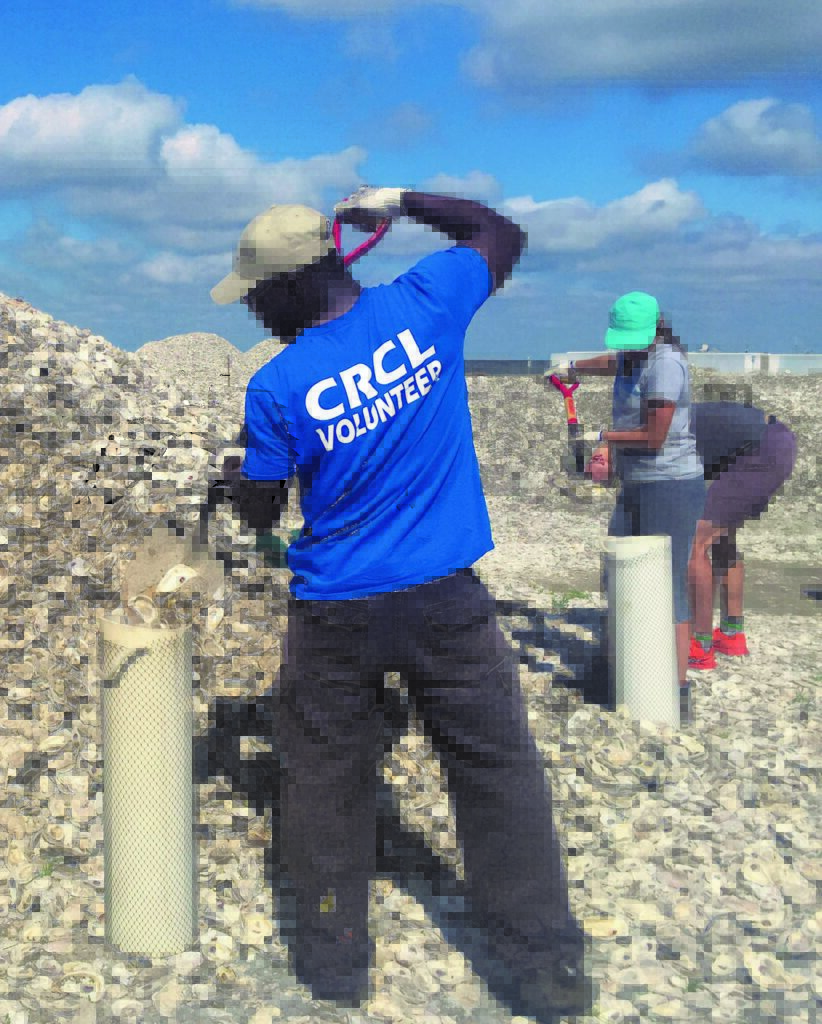
A portion of the deployed vertical oyster garden units will be selected for quarterly biological and environmental monitoring for oyster larvae recruitment. People like you will provide data used to tracking the health and suitability of oyster reefs across the BTES, helping inform site selection for future recycled oyster shell living shoreline installations. The VOGs will be assessed by volunteering property owners at zero-, three-, six- and 12-month marks and documented in an ArcGIS survey. Volunteers will report on the presence and relative abundance of biota supported by the VOG, including but not limited to oyster recruits, mussels, barnacles and other encrusting organisms.
CRCL will then identify the nearest Coastwise Reference Monitoring System (CRMS) station to the 30 monitoring VOG host sites and collect environmental baseline data to represent water conditions at the time of installation. This will enable us to understand the baseline conditions for each monitored VOG. Environmental data will be pulled from these CRMS systems quarterly to coincide with biological monitoring.
Monitoring guidance
To assess the vertical oyster garden, a participant will carefully pull the VOG out of the water and place it in a plastic container. There is no need to untie the VOG. Before they start observing the VOG, they’ll take a photo (bird’s-eye view) of the entire VOG in the container. As soon as they have collected the data needed, they will carefully submerge the VOG back into the water. We recommend that they write down the data on a notepad or a piece of paper and capture the photos with a phone. Once a person has returned the VOG back into the water, they’ll transfer the data and photos to the ArcGIS survey.
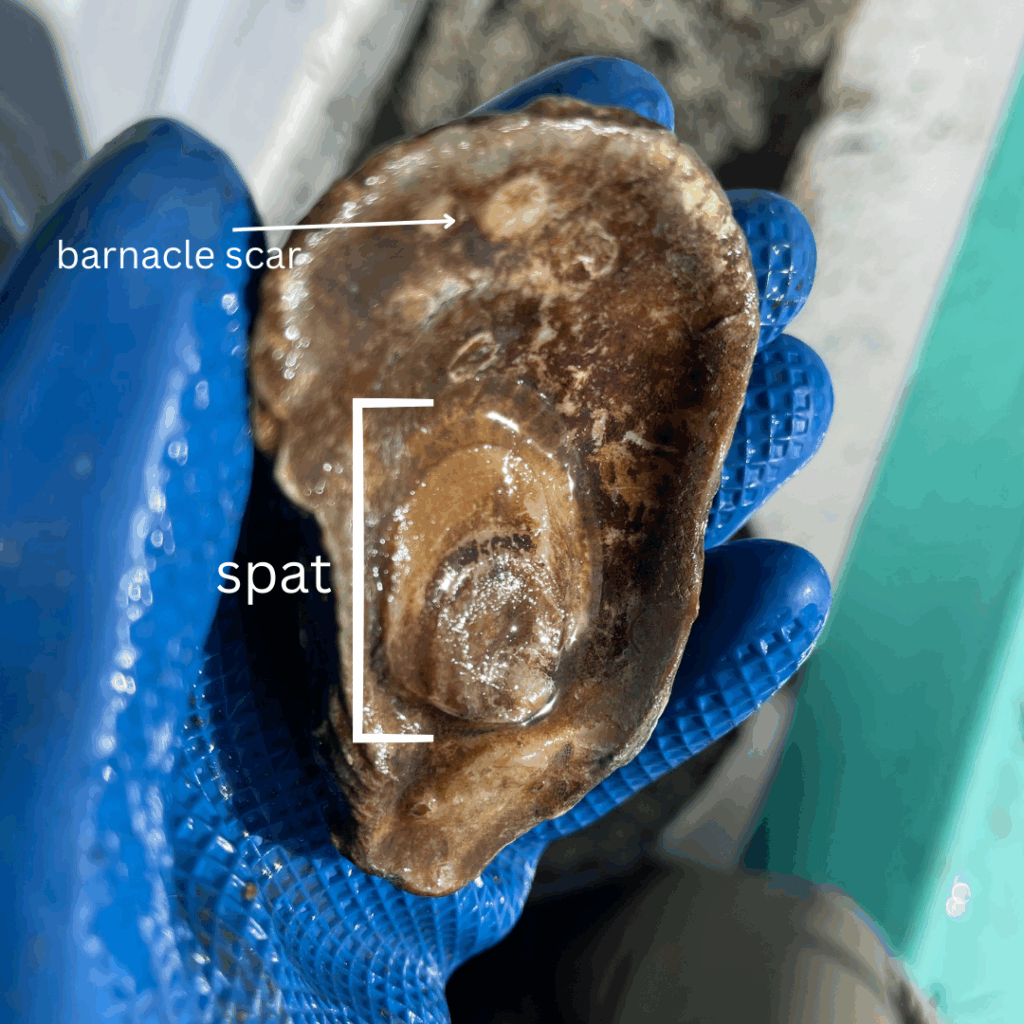
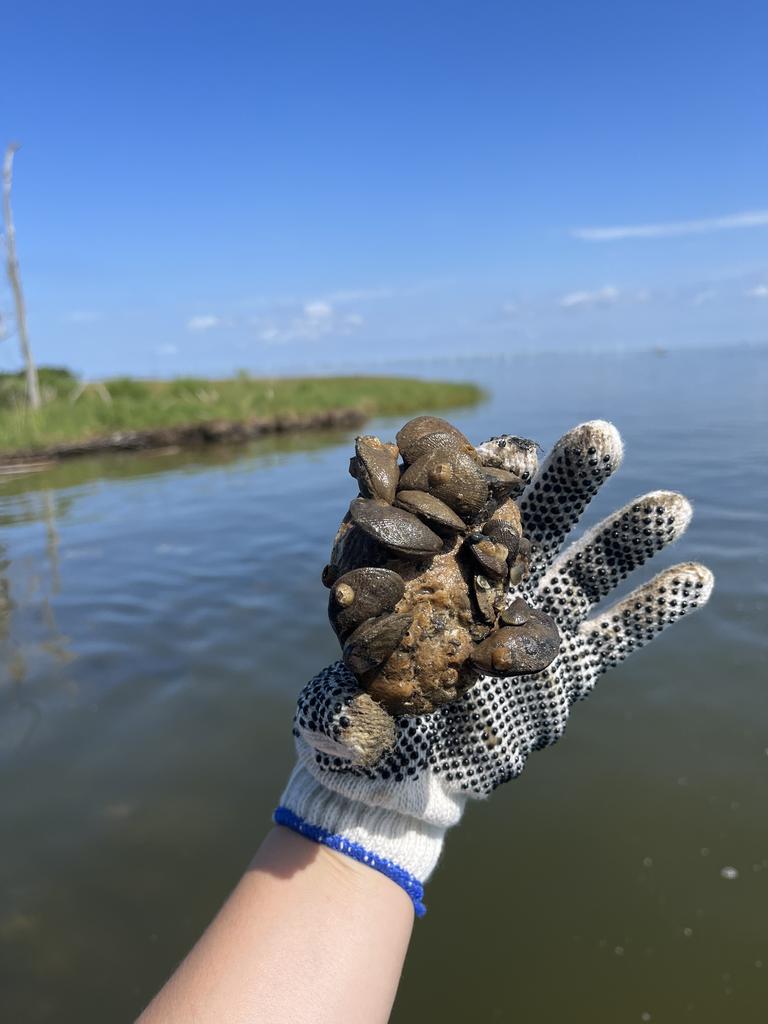
Data to Collect
Oyster Recruitment
• Number of live and dead oyster recruits (aka spat or oyster larvae)
• If applicable, one photo of a live recruit and one photo of a dead recruit
• Notes of any observations you feel are necessary to share
All other species/taxa present on the unit, including but not limited to crabs, worms, mussels, barnacles and snails
• Name/description/species ID of the organism
• The number of each species
• A photo of each type of species
• Notes of any observations you feel are necessary to share
Locations
The vertical oyster gardens will be found across the lower parts of the Barataria and Terrebonne Basins in Plaquemines, Jefferson, Lafourche and Terrebonne Parishes.
